

District Profile
Kokrajhar district agricultural profile
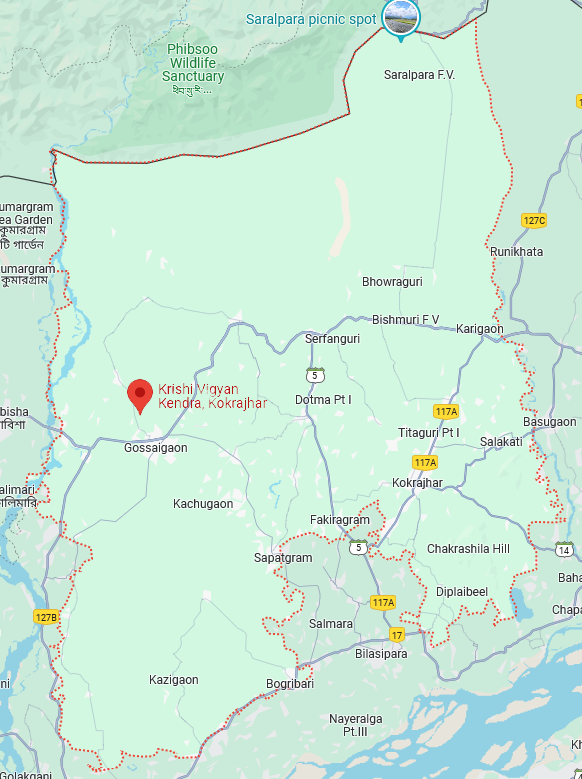
Operational setting of KVK Kokrajhar in Assam's Lower Brahmaputra Valley Agro-Climatic Zone.
Paddy-based agriculture
Inland fisheries
Eco-tourism potential
Overview
KVK Kokrajhar in the district context
The Krishi Vigyan Kendra is situated in Kokrajhar district within the Lower Brahmaputra Valley Agro-Climatic Zone of Assam. The district has a sub-tropical climate with hot, humid summers, cool winters, and heavy monsoon rainfall.
The KVK serves a population of approximately 887,000 across 3 civil subdivisions and 5 revenue circles, working through multiple development blocks. Its operational area covers more than 3,169 square kilometres across the district.
Soils generally range from alluvial to sandy-loam types, supporting paddy-based agriculture along with diversified crop and horticultural systems.
Agriculture and allied sectors
Major production systems and opportunities
The district economy is closely linked with agriculture, animal husbandry, fisheries, forest resources, and emerging value-chain opportunities.
Paddy-based farming
Rice is the principal crop, creating scope for surplus grain marketing and local value chains.
Crop diversification
Maize, pulses, oilseeds, potatoes, cabbage, cauliflower, and other winter vegetables support diversified production.
Horticulture growth
Improved horticultural crop adoption is helping farmers enhance seasonal vegetable and fruit-crop yields.
Allied rural economy
Forest resources, inland fisheries, animal husbandry, and agriculture remain central to livelihood systems.
Growth potential
Agro-processing, eco-tourism, and ethno-tourism
The district's paddy-based farming system offers opportunities for surplus grain marketing and local agro-processing. Rich natural resources, inland fisheries, and attractions such as Manas National Park and Raimona National Park also create potential for eco-tourism and ethno-tourism linked with rural development.